Home Inspection in Kanata
Property Inspection Network inspects homes across Kanata — Beaverbrook, Katimavik, Bridlewood, Glen Cairn, Kanata Lakes, Morgan's Grant and Kanata North. Our inspectors hold licences through Professional Engineers Ontario and work to the OAHI Standards of Practice.
Kanata is really two housing markets wearing one name, and knowing which one you're buying into determines what your inspection should be looking for.
Kanata's Two Housing Markets
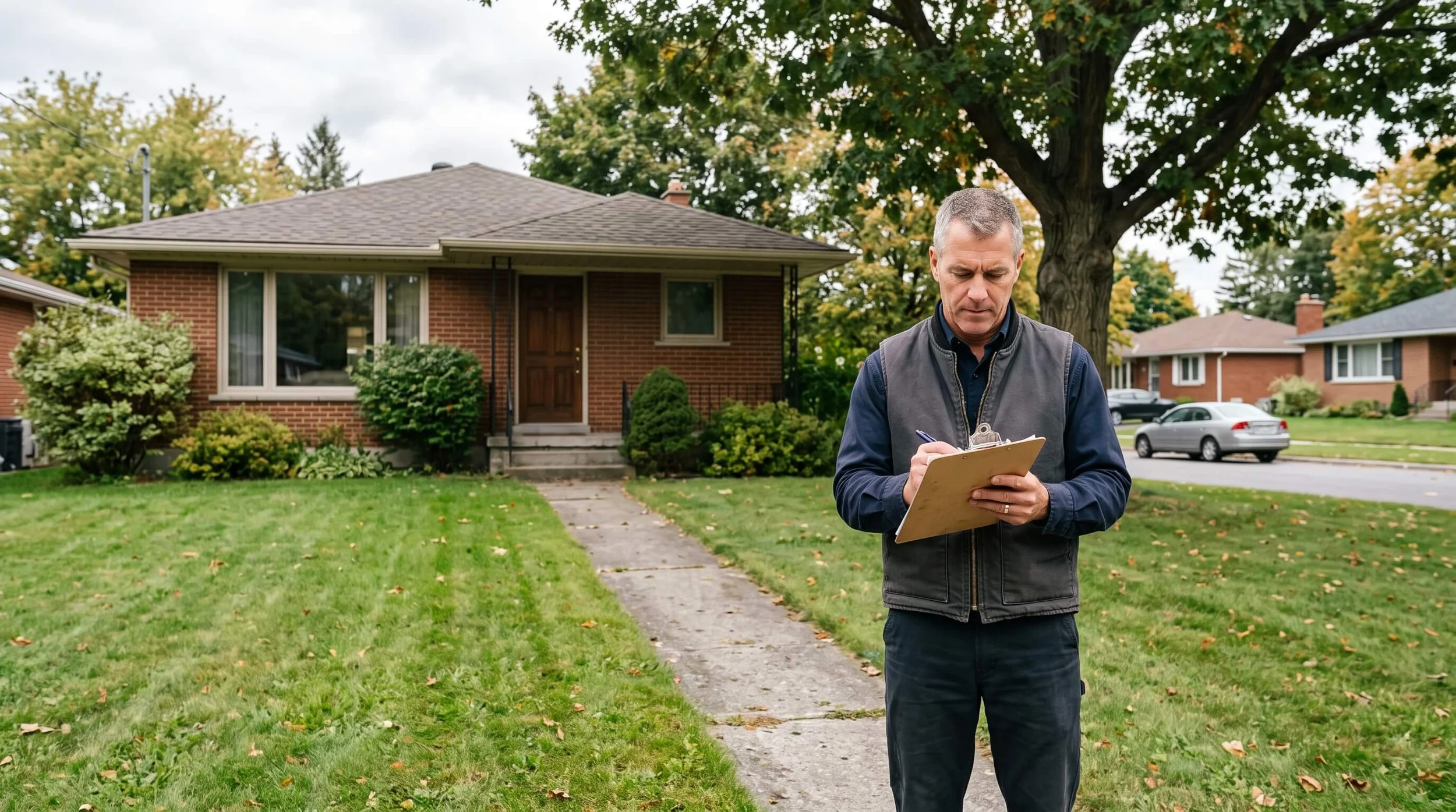
Beaverbrook and Katimavik: the planned community era. Beaverbrook was developed from the mid-1960s as a deliberately designed community, and Katimavik followed in the 1970s. These are well-built neighbourhoods with mature trees and generous lots — and a construction-era defect profile that a general inspection can easily understate.
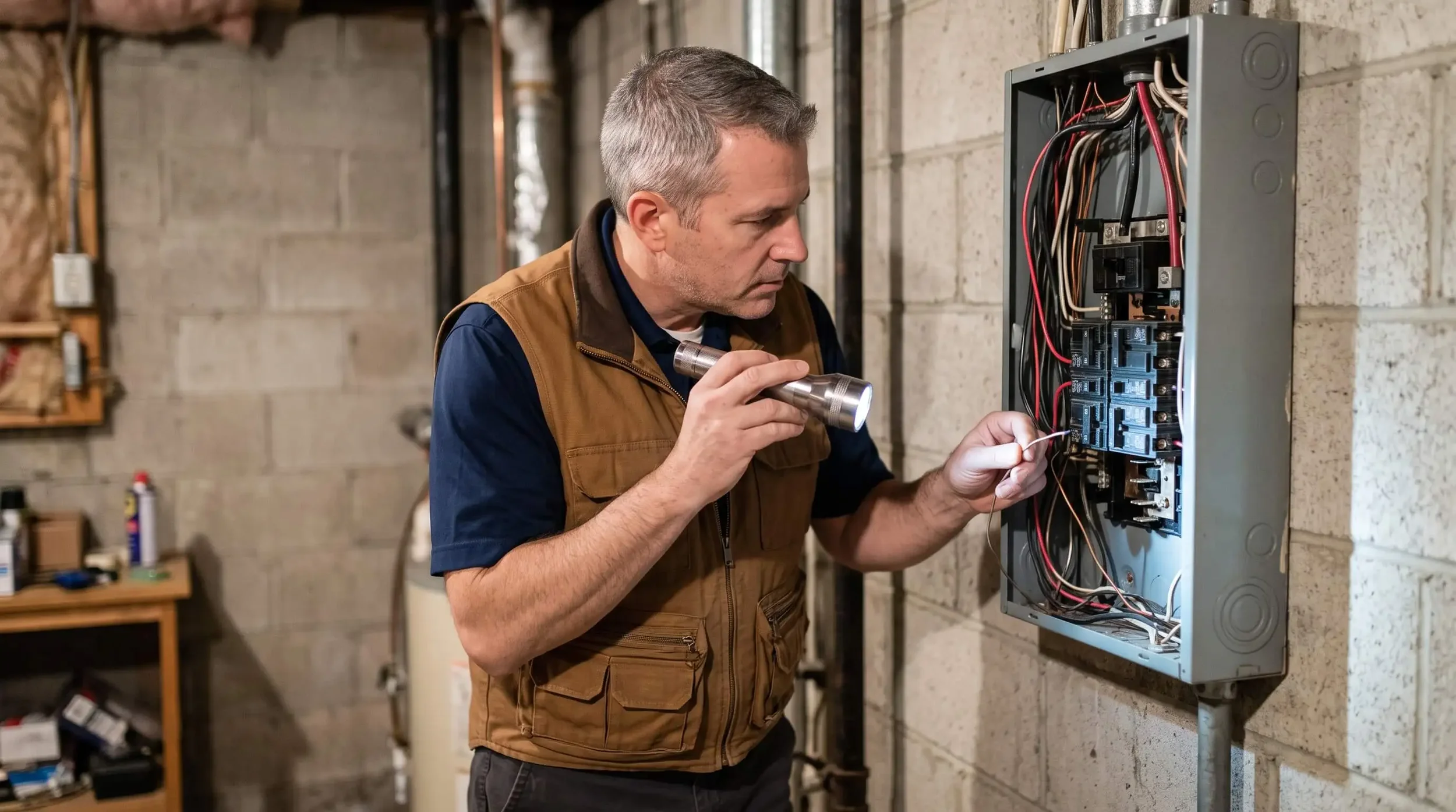
Aluminum branch circuit wiring is the defining Kanata issue. Homes built in the Ottawa region between roughly 1965 and 1978 were frequently wired with aluminum branch circuits. Aluminum expands and contracts more than copper, oxidizes differently, and is softer — which means connections at outlets, switches and panels can loosen over decades and develop resistance heating at the termination point.
This is not a reason to avoid a Kanata home. Aluminum wiring is manageable through proper remediation — CO/ALR-rated devices or approved connectors correctly installed at every termination. But it has real consequences buyers need to know about before closing, because many insurers require documentation of the wiring type and evidence of remediation before they will bind a policy. Buyers discover this at the worst possible moment, days from closing, when the insurance application comes back with conditions. We identify the wiring type and the state of remediation, and we say so plainly in the report.
Other construction-era items in older Kanata: flat and low-slope roof sections on the period's modernist designs, which need different assessment than a sloped shingle roof; original cedar siding at end of service life; polybutylene (poly-B) supply piping in some late-1970s and 1980s homes, which is another insurance conversation; and electrical panels at or past their expected service life.
Kanata Lakes, Morgan's Grant and Kanata North: the newer market. Development from the 1990s onward, much of it tied to the technology sector's growth in the north end. Here the inspection focus shifts to builder workmanship, lot grading and settlement, attic insulation coverage, HVAC commissioning, and — for homes still inside the coverage window — Tarion warranty documentation.
What Your Kanata Inspection Covers
Electrical
Panel condition and capacity, branch wiring type identified and reported, remediation status at accessible terminations, GFCI/AFCI protection, bonding and grounding
Structure and foundation
Walls, slab, framing, evidence of movement or moisture intrusion
Roof
Including proper assessment of flat and low-slope sections; drone inspection where a roof is too steep or high to walk safely
Plumbing
Supply piping material identified, drainage, water heater, pressure and flow
HVAC
Furnace, air conditioning, HRV, distribution and balance
Exterior
Cladding condition, grading, drainage, decks, garage
Insulation and ventilation
Attic depth and coverage, exhaust termination, vapour control
Interior
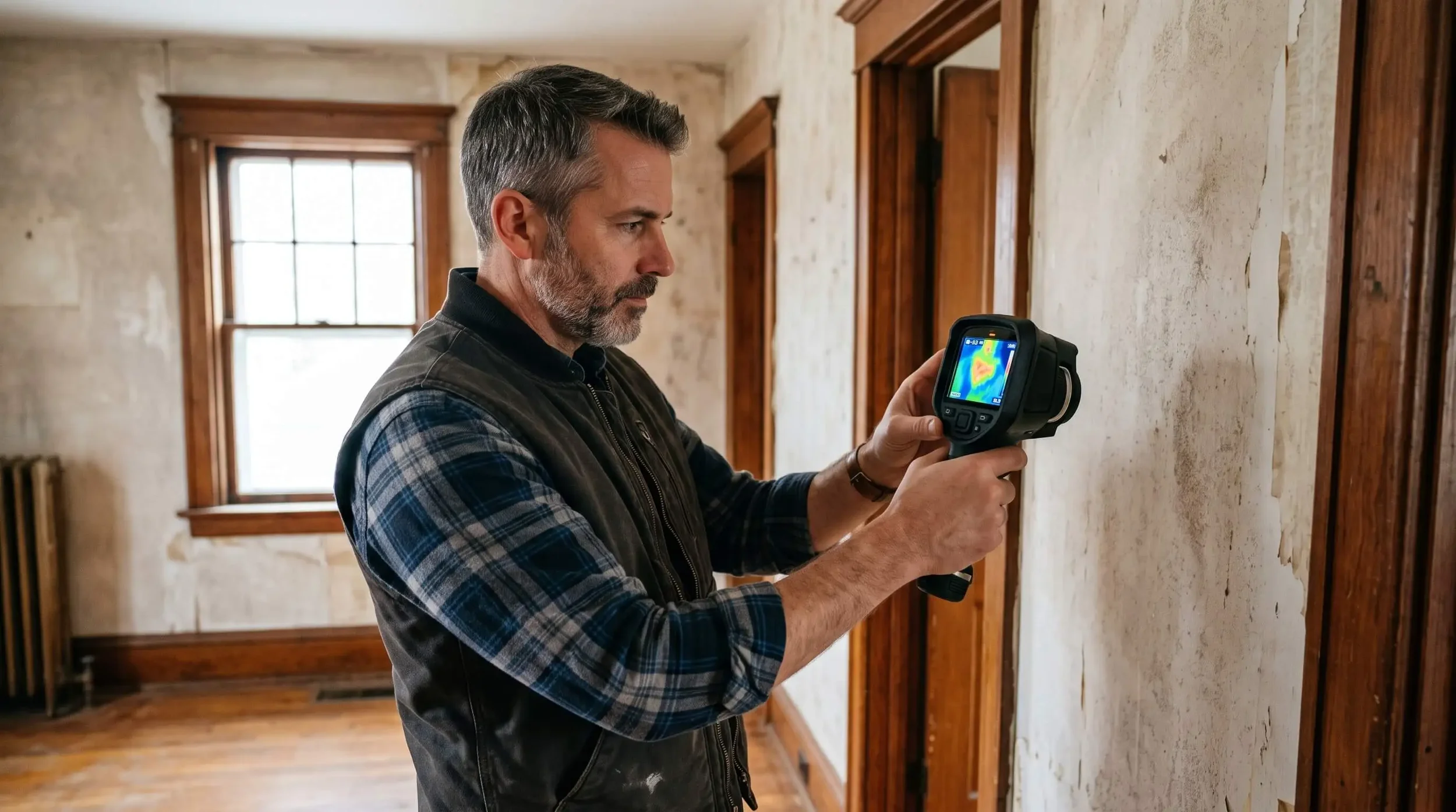
Windows, doors, finishes, with thermal imaging on accessible surfaces
Why an Engineering-Based Inspection Matters in Kanata
Alain Charron, our lead technical inspector, is a P.Eng with more than 25 years of experience in building science, infrared diagnostics and structural performance. On a Beaverbrook or Katimavik home, that background is directly relevant: assessing a low-slope roof assembly, evaluating whether aluminum terminations have been properly remediated, and using thermal imaging to find moisture or thermal defects behind fifty-year-old finishes are not routine visual checks.
We are independent. We do not represent builders, developers, sellers or brokerages, and we take no referral fees. Our report is written for the person paying for it.
Other Services Requested in Kanata
Air Quality Testing
Worth considering in older Kanata homes with original ventilation and decades of accumulated finishes.
Mold Inspection
For basement moisture, flat-roof leak history, or unexplained odours.
WETT Inspection
For wood stoves, fireplaces and inserts, common in older Kanata homes and frequently required by insurers.
Pre-Listing Inspection
Particularly useful if you're selling a home with aluminum wiring, so you can document remediation before a buyer's inspector raises it.
Nearby Communities
Stittsville — immediately south, with its own split of village-core heritage and new subdivision growth.
Carp & Dunrobin — rural west Ottawa, where properties run on private wells and septic systems.
Nepean — to the east, sharing a similar postwar-to-1980s defect profile.
Service Area
Kanata Home Inspection FAQ
Does my Kanata home have aluminum wiring, and how would I know?
If it was built between roughly 1965 and 1978, it's a genuine possibility, and Beaverbrook and Katimavik fall squarely in that window. It isn't reliably determined by looking at a panel cover — it requires examining conductors at accessible terminations. We identify the wiring type on every inspection and report the state of any remediation.
My insurer is asking about aluminum wiring and poly-B plumbing. Can your report answer that?
Yes. We identify both branch wiring type and supply piping material and describe what we observed at accessible points. Insurers set their own requirements and some ask for a licensed electrician's certification of remediation specifically — our report tells you where you stand and what you'll likely be asked to produce.
Are the flat roof sections on older Kanata homes a problem?
They're not inherently a problem, but they behave differently from sloped roofs and need to be assessed on their own terms — membrane condition, drainage and ponding, flashing and parapet detail, and insulation performance underneath. This is one of the more common areas where a Kanata inspection needs an engineering eye rather than a checklist.