Home Inspection in Vanier, Alta Vista & Gloucester
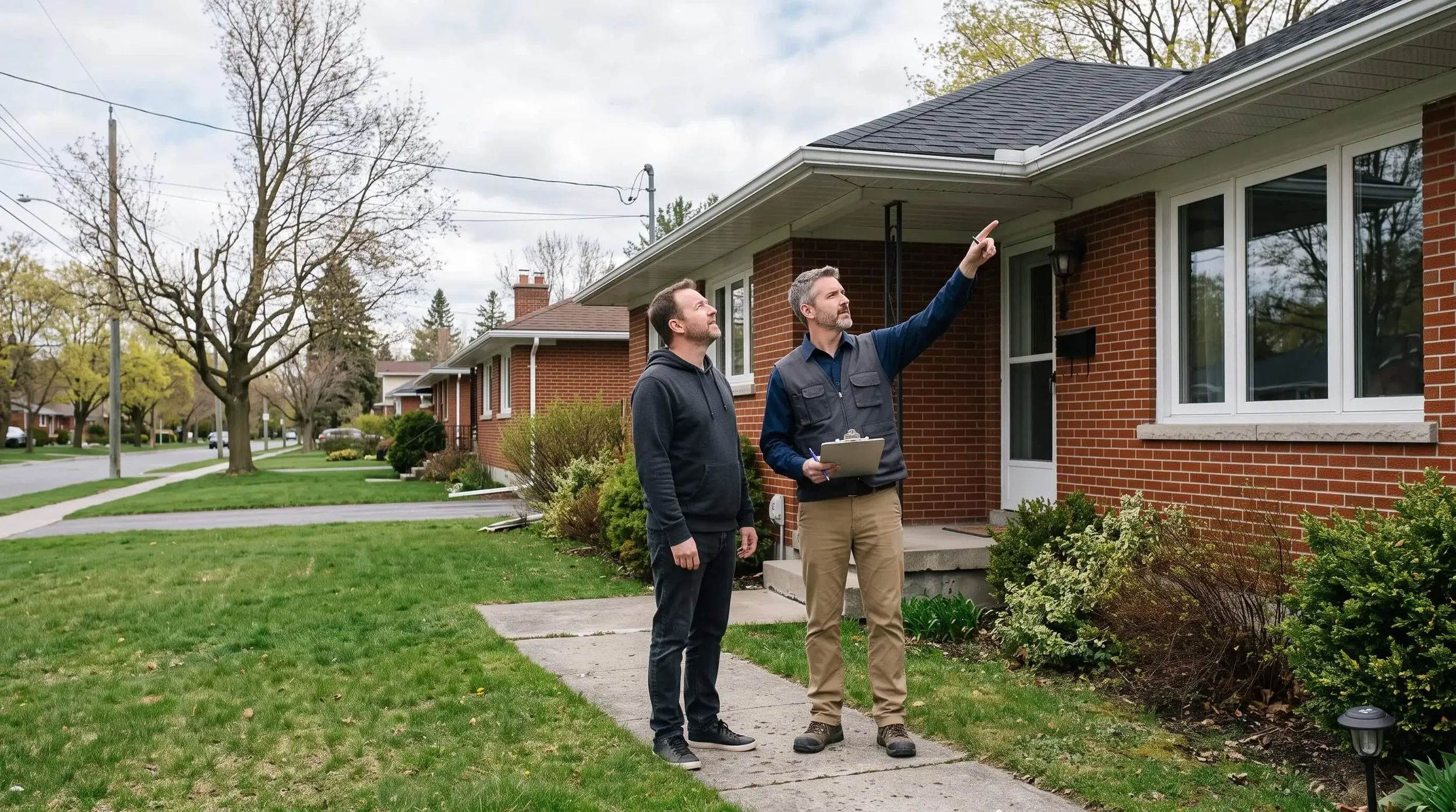
Property Inspection Network inspects homes across Ottawa's established inner neighbourhoods — Vanier, Alta Vista, Gloucester, and the surrounding areas including Overbrook, Elmvale Acres and Manor Park. Our inspectors are licensed through Professional Engineers Ontario and work to the OAHI Standards of Practice.
These are among the oldest and most varied housing stocks in the city. A pre-war Vanier duplex, a 1958 Alta Vista bungalow and a 1970s Gloucester split-level are three different buildings — but they share a defect profile driven by the era they were built in, and it's a profile that catches buyers out.
What Pre-1970 Ottawa Construction Hides
Knob-and-tube wiring
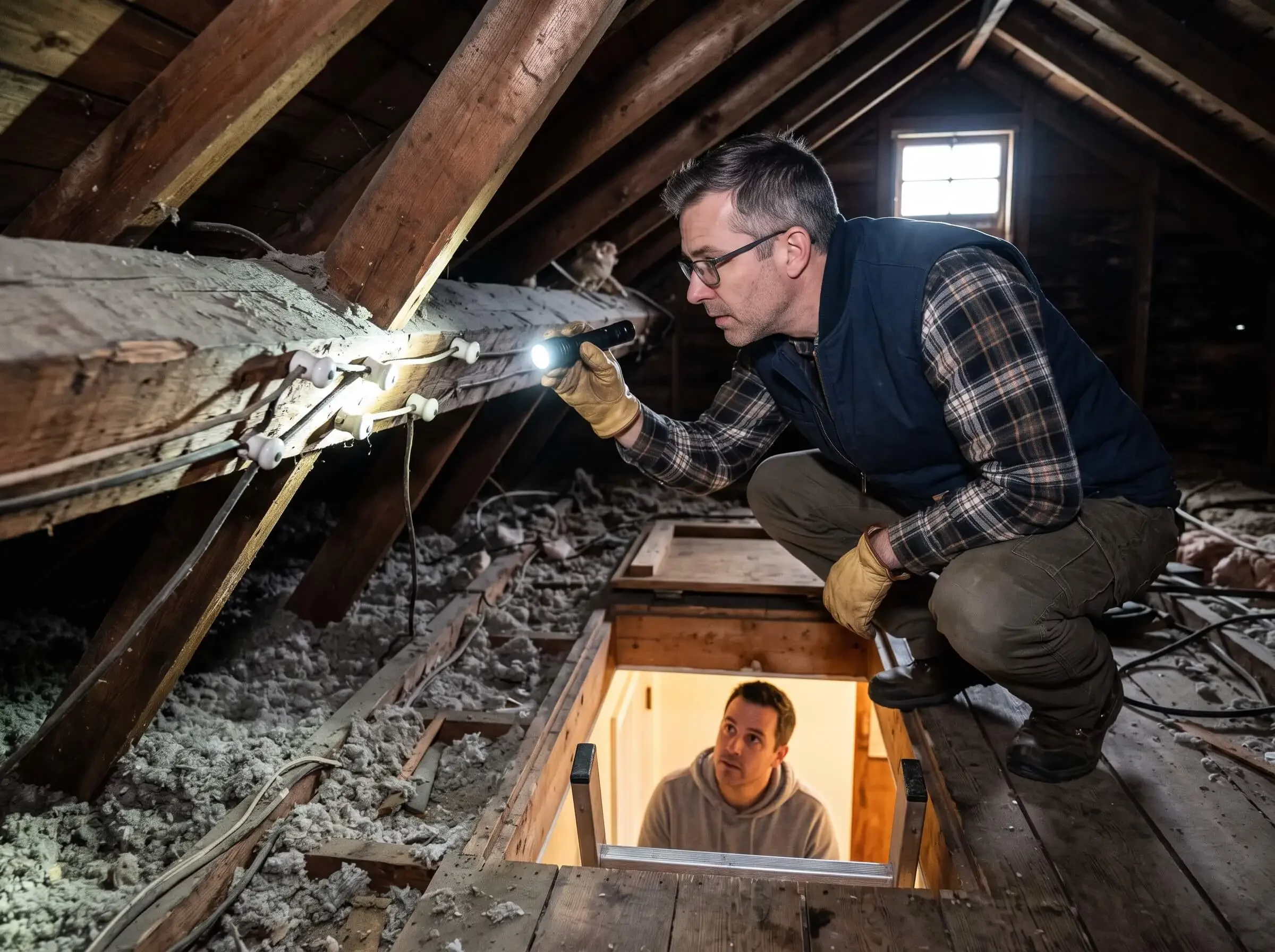
Standard practice into the 1940s and still present in pockets of Vanier, Overbrook and the older parts of Gloucester. It's identifiable by ceramic knobs and tubes supporting individual conductors through framing.
The concern isn't that it was poorly made — much of it was well installed. The concerns are that it has no grounding conductor, that its insulation embrittles with age, that it was never designed for modern electrical loads, and that it becomes genuinely hazardous when buried in insulation, which is exactly what happens when an attic gets upgraded without regard for the wiring beneath.
The practical consequence hits at closing: many insurers will not bind a policy on a home with active knob-and-tube wiring, or will require certification that it's been removed from service. Buyers routinely discover this days before closing. We identify it at accessible points and report the extent of what we can see.
Buried oil tanks
Oil heat was standard across these neighbourhoods before gas service was extended. Many homes converted decades ago; not all removed the tank. An abandoned underground tank is a real liability — leaks contaminate soil, remediation is expensive, and the obligation runs with the property. We look for capped fill and vent pipes, abandoned supply lines at the foundation, tank supports, and disturbed ground.
Asbestos-containing materials
In this era, asbestos appears in vermiculite attic insulation, duct wrap, pipe insulation, floor tile and tile adhesive. Undisturbed, these generally present low risk. The consequence lands on renovation — every one of them makes future work more complicated and more expensive. We identify what's visible and explain what it means for your plans.
Ageing distribution systems
Cast iron drain stacks corroding at seventy-plus years, with failures typically inside walls. Galvanized supply piping progressively restricting flow. Electrical panels at end of service life — 60-amp services, fuse panels, and Federal Pacific Stab-Lok or Zinsco panels with documented failure histories.
Vanier: Duplexes, Triplexes and Investment Property
Vanier has one of Ottawa's highest concentrations of converted multi-unit residential property — single-family homes divided into duplexes and triplexes over the decades, frequently without permits.
If you're buying as an investor, several things matter beyond the standard inspection:
Alta Vista's Postwar Bungalows
Alta Vista and Elmvale Acres are largely 1950s and 1960s development — solid, generously lotted, and now approaching seventy years old.
The recurring findings here are vermiculite in attics, original galvanized supply piping, electrical services undersized for modern demand, attic ventilation designed to 1950s expectations, and finished basements built in the 1970s or 1980s that conceal the foundation entirely. That last one matters: thermal imaging and moisture metering are how we assess a foundation wall we can't see.
Was the conversion legal and permitted?
Unpermitted conversions carry compliance exposure with the City of Ottawa, and can affect financing and insurance.
Fire separation between units
Required between dwelling units, and frequently absent or compromised in informal conversions. This is a life-safety item, not a paperwork item.
Egress from every unit
Including basement units — window size, sill height and access.
Separate or shared services
Electrical distribution, heating and metering arrangements affect both operating cost and compliance.
Deferred maintenance patterns
Rental properties are maintained differently from owner-occupied ones, and the difference shows up in specific places.
What Your Inspection Covers
Structure and foundation
Including foundations concealed by finished basements, assessed with thermal imaging
Electrical
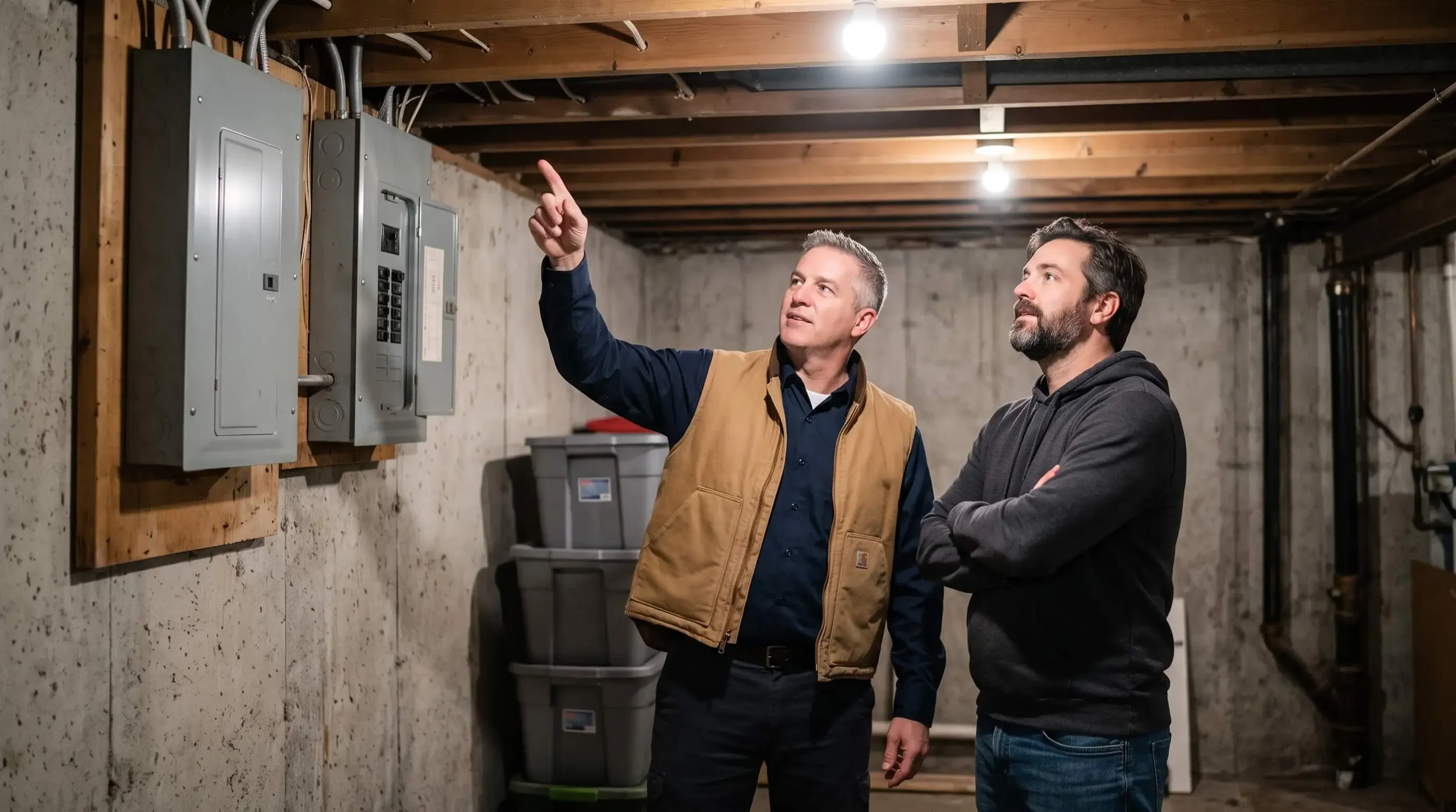
Panel type, capacity and condition, branch wiring type identified including knob-and-tube, protective devices
Plumbing
Supply and drainage materials identified, water heater, pressure and flow
Heating and cooling
Furnace, air conditioning, evidence of prior oil heating and conversion
Roof
Shingles, flashing, ventilation, ice damming; drone inspection for steep or high roofs
Exterior
Cladding, grading, drainage, decks, garage, buried oil tank indicators
Insulation and ventilation
Attic insulation type identified, depth, coverage, exhaust termination
Interior
Windows, doors, finishes, with thermal imaging on accessible surfaces
Multi-unit items by arrangement
Fire separation, egress, service separation
Other Services Requested in Central Ottawa
WETT Inspection
For wood stoves, fireplaces and inserts, common in the older stock and usually an insurance requirement.
Pre-Listing Inspection
In neighbourhoods where buyers expect knob-and-tube and oil tank questions, having documented answers ready protects your price.
Areas We Serve



Neighborhoods We Serve
Recreation & Activities
Explore some of the parks, attractions and local destinations that make the communities we serve great places to live.
Central Ottawa Home Inspection FAQ
My insurer is asking about knob-and-tube wiring. What will your report tell them?
We identify the branch wiring type at accessible points and describe the extent of what we observed, including whether knob-and-tube appears to remain in active service. Insurers set their own requirements, and many want certification from a licensed electrician that it's been removed from service — our report tells you where you stand and what you're likely to be asked for.
I'm buying a Vanier triplex as an investment. Is that a standard inspection?
It's a larger one. Three units means three sets of systems, plus fire separation between units, egress from each, and service separation. There's also the question of whether the conversion was permitted, which is a City of Ottawa records inquiry worth making. Tell us it's multi-unit at booking so we can scope and time it properly.
The basement is fully finished and I can't see the foundation. Does that limit the inspection?
It limits direct visual observation, which we'll state plainly in the report. It doesn't leave us blind — thermal imaging identifies temperature differentials indicating moisture or missing insulation behind finishes, and moisture metering picks up elevated readings through many surfaces. Where indicators warrant opening something up, we say so directly rather than leaving it ambiguous.